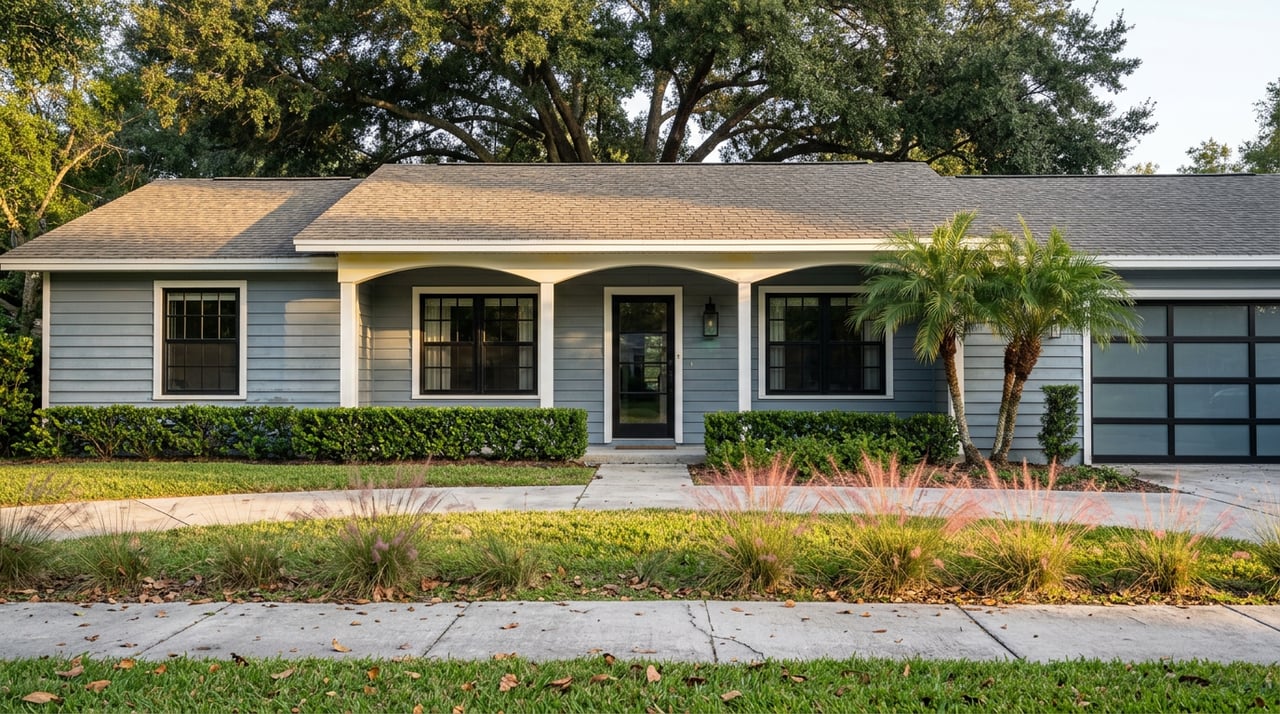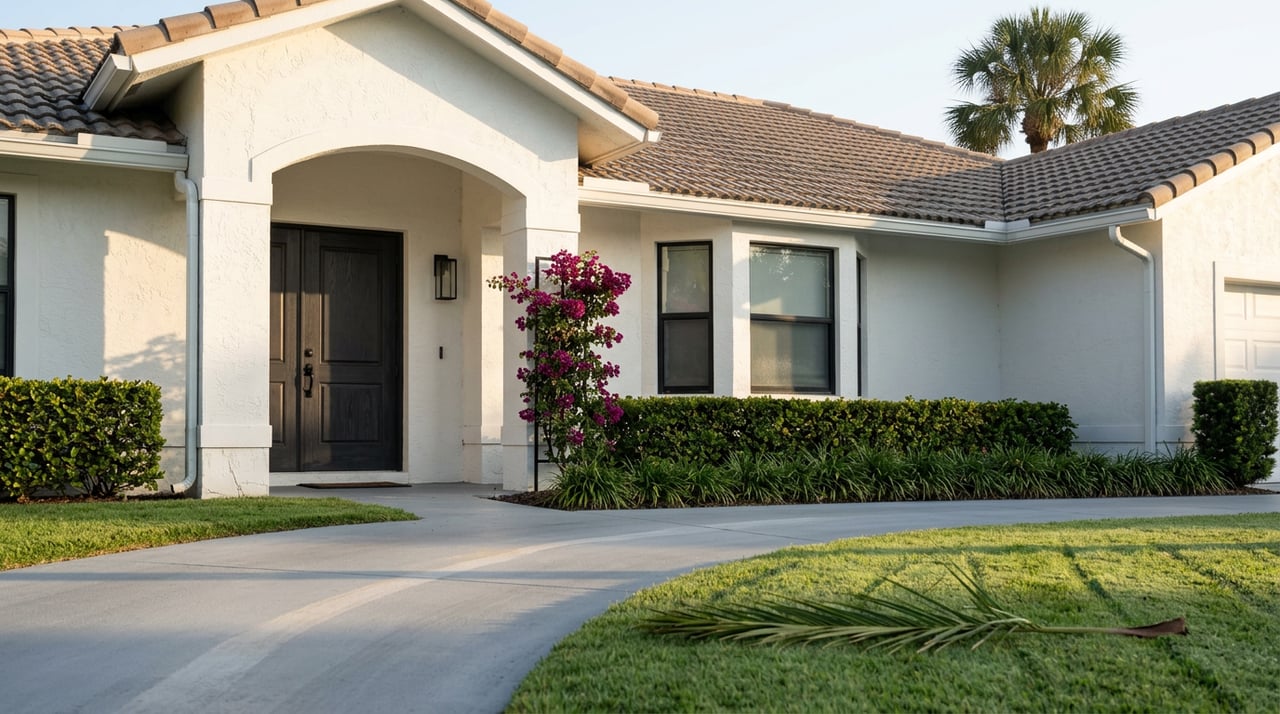
Pull up two Eastport listings this month with the same square footage and the same asking price, and you would assume the total cost of owning each one is roughly the same. It isn't. One of those homes is new construction, built by The Villages within the past year or two. The other is a resale, its original owner having already moved on. The sale price on the sign is identical. What each buyer actually owes over the life of that mortgage is not, and the gap comes down to a single line item that behaves completely differently depending on which door you walk through.
That line item is the CDD bond, and in Eastport it is not a rounding error. Eastport is the newest of The Villages' five town squares, and new infrastructure means new debt. The trick is that the debt shows up in two entirely different forms depending on how you buy, and most buyers only learn which form they got after the fact.
The Bond That Hides Inside the Price Tag
When The Villages builds out a new section like Eastport, the roads, water and sewer lines, streetlights, and recreation centers get financed upfront through a municipal bond before a single home closes. On new construction, that bond debt gets folded directly into the developer's purchase price and added at closing. There is no separate line for it on your buyer paperwork. It gets smoothed into your mortgage payment along with everything else, and the number you negotiate with the builder is already the number that includes decades of infrastructure debt service.
This is not a secret exactly, but it is invisible in practice. A buyer comparing a new Eastport floor plan to a similarly priced resale a few streets away is comparing a number that has the bond baked in against a number that might not, without realizing the two prices are structured completely differently underneath.
Same Debt, Now Wearing a Name Tag
Buy the same kind of home as a resale instead, and that bond debt stops hiding. It surfaces as a specific, separately named charge on the annual property tax bill: a non-ad valorem "Bond Debt Assessment," distinct from ad valorem property taxes and distinct from the CDD's ongoing maintenance assessment. Because Eastport is the newest section in the community, resale bond balances here run high, commonly in the $20,000 to $40,000 range on the remaining principal. Converted to a monthly figure, a bond in a newest-section resale typically runs somewhere around $225 to $300 a month, compared to roughly $125 to $250 a month for a typical resale bond in an older, southern-area village. That is on top of property taxes and separate from the monthly amenity fee, which sits around $204 a month for new buyers as of early 2026 and pays for access to recreation centers and pools rather than any infrastructure debt.
The upside of a visible bond is that it becomes something you can actually work with. A seller can pay off the remaining balance before closing, and the home then gets marketed as "bond paid," a term you will see repeated across Eastport resale listings. A buyer can also request the payoff statement directly from the district's Bond Team and decide whether to negotiate the seller into covering it, assume it as-is, or pay it off themselves at closing. None of that flexibility exists on the new construction side, where the bond is already fused into a fixed developer price.
Here is the comparison side by side:
| New Construction | Resale | |
|---|---|---|
| Where the bond shows up | Folded into total price, no separate disclosure | Separate non-ad valorem line item on the tax bill |
| Can you negotiate it | No, it's part of the developer's fixed price | Yes, seller may pay it off or buyer may assume it |
| How you find the exact figure | Not typically itemized in the sale price | Payoff statement available from the district's Bond Team |
| Financing | Automatically amortized into your mortgage | Buyer chooses to assume, pay off, or negotiate at closing |
Why Merritt Field Resets the Question Again
This is not a static comparison, because Eastport itself is still being built. The Village of Merritt Field, sited between the Beautyberry and Honeysuckle executive golf courses near Farmstead Recreation, released new cottage homes on September 3, 2026. Those homes are, right now, on the invisible side of the bond ledger. Whoever buys one this fall is buying a price that already includes the infrastructure debt, no different from anyone who bought in Waters Edge or Shady Brook when those sections were the newest thing on the map.
Give it two or three years and those same Merritt Field cottage homes will start showing up as resales, and their bond balances will start showing up as separate line items on someone else's tax bill, the same way today's Eastport resales carry balances from a construction wave that is already a couple of years behind it. The newest section always looks like a special case until it becomes the next section's cautionary tale. Buyers who understand that cycle stop asking "what's the price" and start asking "what's actually included in that price."
Before You Write the Offer
A few concrete steps make the difference between comparing two numbers and comparing two actual costs.
- If you're buying new construction, ask the builder whether the bond amount financed into your section is available as a separate figure, even though it won't appear as a line item on your purchase price. Some buyers assume this can't be requested. It can.
- If you're buying resale, request a formal bond payoff statement from the district's Bond Team, dated to your anticipated closing date, not an estimate from a listing sheet.
- Get in writing whether the seller is paying off the bond before closing or whether you are assuming the remaining balance. "Bond paid" should appear in the contract language itself, not just the marketing description.
- Convert whatever annual bond figure you're given into a monthly number and add it to your mortgage payment, property tax estimate, and amenity fee before comparing that home to any other one, new or resale.
A few questions that come up often
Can I pay off an Eastport bond after closing instead of handling it at the table? Yes. The district's Bond Team accepts payoffs at any time of year, not just at closing, though the timing affects whether the assessment still appears on that year's tax bill.
If I pay off the bond, do all my CDD charges go away? No. The bond is the debt-service portion and has an end date. The CDD's separate maintenance assessment, which funds ongoing upkeep of roads, landscaping, and stormwater systems, continues indefinitely regardless of whether the bond is paid off.
Is the bond the same thing as the monthly amenity fee? No. The bond is an annual, government-levied debt assessment tied to the parcel. The amenity fee is a separate monthly contractual charge that funds access to recreation centers, pools, and golf course walking play, and it has nothing to do with infrastructure debt.
If you're weighing a brand new Eastport home against a resale a few streets over, the sale price is the easiest number to compare and the least useful one on its own. Martha Ridgway walks Eastport buyers and sellers through the bond math on both sides of that comparison before an offer goes in, not after. Request Your Free Home Valuation to start with the numbers that actually determine what a specific Eastport home will cost you.