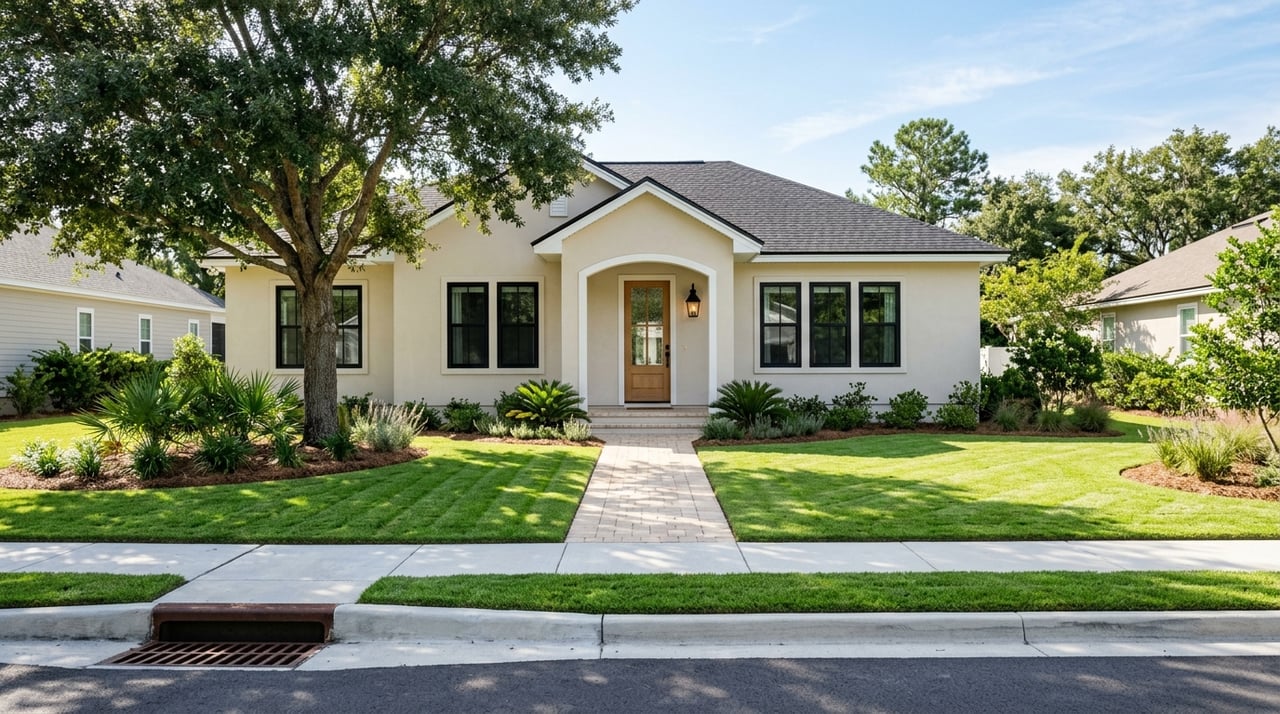
If you are comparing homes in The Villages, fee structures can feel more confusing than the homes themselves. You might see references to HOA fees, CDD charges, amenity fees, bond assessments, and maintenance assessments, and it is not always obvious what each one covers. The good news is that once you understand how The Villages is set up, the numbers become much easier to evaluate. Let’s break it down.
How fees work in The Villages
One of the biggest points of confusion is that The Villages does not operate like a typical community with one master HOA fee. Instead, much of the infrastructure and services are organized through Community Development Districts, often called CDDs.
Under Florida law, these districts are independent special-purpose local governments that can finance, operate, and maintain infrastructure and services. According to The Villages District Office, that can include roads, streetlights, water management, sewer systems, recreation areas, waste collection, and more.
For you as a buyer, that usually means looking at three main cost categories instead of one simple HOA payment.
The three main fee types
Amenity fee
The monthly amenity fee helps support the lifestyle side of living in The Villages. According to The Villages cost-of-living page, this fee helps fund executive golf, recreation centers, pools, sports areas, dog parks, fishing areas, trails, activities, and Community Watch.
That same page currently lists the amenity fee for homes at $204 per month. It also highlights the broader lifestyle benefits tied to that fee, including 4,000+ activities and clubs and 46 executive golf clubs.
It is important to know that the amenity fee is not necessarily fixed forever. The district explains that amenity fees are adjusted based on the Consumer Price Index, with review timing tied to the property’s original land-sale date or deed restrictions.
Bond assessment
The annual bond assessment is different from the amenity fee. This charge repays the debt used to build the original infrastructure for a district, such as roads, tunnels, multi-modal paths, and water conveyance and storage systems, as explained in the district FAQs.
This is one reason two homes that seem similar on the surface can carry different ongoing costs. A property may still have an outstanding bond, or the bond may already have been prepaid.
The district also notes in its FAQ section that bond assessments can be prepaid at any time. That makes it especially important to verify the status for the specific property you are considering.
Maintenance assessment
The annual maintenance assessment covers the ongoing operation, upkeep, and administration of district-owned property and systems. This is the fee that helps maintain things like roads, landscaping, streetlights, paths, fences, stormwater facilities, insurance, and administrative costs, based on the district’s explanation of assessments.
In other words, these charges are not just about amenities. They also support the physical systems that keep the community functioning day to day.
Where buyers usually see these charges
A common misconception is that all of these costs show up in one place. In reality, buyers may see them split between the utility bill and the county tax bill.
According to the new homeowner billing sheet from the district, your monthly bill may include water, sewer, irrigation, trash, and the amenity fee. Bond and maintenance assessments, however, typically appear on the county tax bill in the non-ad valorem section.
That separation can make total housing costs harder to compare unless you gather all the pieces. It is one of the reasons buyers sometimes underestimate the full recurring cost of ownership.
Why costs vary from home to home
If you have looked at more than one property in The Villages, you may have already noticed that the fees are not identical. That is normal.
The district explains that residents are served by more than 25 districts, and charges can vary by district, utility area, and home type. The cost-of-living page also shows sample development district assessments ranging from $215 to $385 per month, depending on the home series, while noting that these are estimates only.
That means a nearby home is not always a reliable benchmark. To compare accurately, you need the fee information for the exact address.
What the amenity fee really supports
Because the amenity fee gets a lot of attention, it helps to understand what you are paying for. The Villages ties this fee to many of the recreation and lifestyle features that draw buyers to the community in the first place.
These include:
- Executive golf
- Recreation centers
- Pools
- Sports and activity areas
- Dog parks
- Fishing areas
- Trails
- Clubs and activities
- Community Watch
One detail many buyers miss is that free executive golf greens fees do not mean every golf-related cost is included. If you want to use your personal golf car on the executive course trails, the Executive Golf Trail Pass is a separate cost. Current rates are $21.77 for 1 month, $107.77 for 6 months, and $143.70 for 12 months, plus tax.
Costs buyers often overlook
When you are building a realistic budget, it helps to look beyond the advertised purchase price and even beyond the basic monthly fee.
Based on the cost-of-living page and district billing information, buyers often overlook:
- Separate bond and maintenance assessments on the tax bill
- Utility charges for water, sewer, irrigation, and trash
- CPI-based changes to the amenity fee
- Optional costs like golf trail passes
- Property services not included in sample estimates, such as lawn care, pest control, or internet
- First-bill prorations after closing
The district also notes that first utility bills are usually generated about 4 to 6 weeks after closing. In some cases, that first bill may be prorated and include 2 to 3 months of amenity and trash charges, so your initial bill may be higher than expected.
Questions to ask before you buy
The best way to compare homes in The Villages is to ask focused, property-specific questions. General averages are helpful, but they are not enough for a true apples-to-apples comparison.
Here are some of the most useful questions to ask:
Which district is this home in?
The answer matters because district and utility area can affect costs. Two homes in different parts of The Villages may not carry the same assessments, even if they have similar prices or square footage.
What is the current amenity fee for this property?
You will also want to ask when the next CPI review of the amenity fee is expected. That helps you understand whether the current amount is likely to stay the same in the near term.
Is the bond still outstanding?
Ask for the current bond assessment amount and whether the bond has already been prepaid. According to the district FAQs, prepaid and outstanding bond situations can change the total cost picture in a meaningful way.
What is included in the monthly bill?
The district says the monthly bill may include utilities, trash, and the amenity fee, but not everything is bundled. Reviewing the latest bill can help you see what is recurring and what may be separate.
Are there property-specific restrictions or association obligations?
The district advises owners to review the Declaration of Restrictions and Community Standards for the specific property. This is a home-by-home check, not something you should assume is identical across every neighborhood.
Are there any prorations or one-time charges?
The new homeowner information sheet notes that first-bill prorations may apply, and some homes may also have a one-time PO box fee.
The smartest way to compare homes
If you want the clearest picture of true monthly and annual ownership costs, ask for three items before making comparisons:
- The property’s latest utility bill
- The bond or assessment statement
- The property’s Declaration of Restrictions
That approach is practical, specific, and far more reliable than relying on community-wide averages. It can also help you avoid surprises after closing.
Why this matters when you work with a local agent
In a community as large and layered as The Villages, fee questions are not just small print. They are part of understanding the full cost of ownership and choosing the right fit for your budget and lifestyle.
If you want help comparing homes in The Villages with a clear eye on fees, value, and the details that affect your monthly costs, Martha Ridgway can help you sort through the numbers and make a confident move.
FAQs
What is the difference between HOA fees and CDD fees in The Villages?
- The Villages is primarily organized around Community Development Districts rather than one master HOA, so buyers typically see amenity fees, bond assessments, and maintenance assessments instead of a single standard HOA structure.
What does the monthly amenity fee cover in The Villages?
- The monthly amenity fee helps support executive golf, recreation centers, pools, sports areas, dog parks, fishing areas, trails, clubs, activities, and Community Watch, according to The Villages cost-of-living information.
Where do bond and maintenance assessments appear for a home in The Villages?
- Bond and maintenance assessments typically appear on the county tax bill in the non-ad valorem section, while the monthly utility bill may include utilities, trash, and the amenity fee.
Do all homes in The Villages have the same fees?
- No, costs can vary by district, utility area, and home type, so the most accurate way to compare homes is to review the charges for the specific address.
Can a bond assessment be paid off on a home in The Villages?
- Yes, the district states that bond assessments can be prepaid at any time, but maintenance assessments continue annually.
What documents should buyers request to verify fees for a home in The Villages?
- Buyers should request the latest utility bill, the bond or assessment statement, and the Declaration of Restrictions to see the most complete recurring cost picture for a specific property.