If you live in Middleton or nearby Okahumpka, a golf cart is often your easiest way to get to neighbors, amenities, and errands. The right garage setup turns that convenience into everyday ease. You want a space that fits your cart, charges safely, handles Florida moisture, and looks buyer ready if you decide to sell.
This guide walks you through practical layouts, safe charging and battery basics, floor and moisture protection for Florida conditions, smart storage, and staging ideas that signal move in readiness. You will come away with clear dimensions, simple upgrades, and a plan you can confidently execute. Let’s dive in.
Right-size your cart bay
A typical golf cart is about 4 to 5 feet wide and 8 to 10 feet long. Longer four seat and utility models can run 10 to 12 feet. Plan at least 18 to 24 inches of clearance on each side for doors and comfortable movement, plus 2 to 3 feet at the front and back for access and safety.
For most homes in Middleton, a comfortable single cart bay is 7 to 8 feet wide and 14 to 16 feet deep. A tight single bay can be as small as 6 by 12 to 14, but extra room helps with charging and storage. If you store two carts, aim for 12 to 16 feet of width and 14 to 18 feet of depth, depending on whether you park side by side or in tandem.
Layout options that fit Middleton garages
- Dedicated cart bay in an existing garage. Mark one side with a visual divider, mounted charger, and floor protection. It keeps the floor plan simple and showcases a clear cart zone to buyers.
- Alcove or recessed bay near the main garage door. A shallow recess lets you drive straight in and out without moving cars, which is great for daily errands.
- Drive through cart garage with front and back openings. Where site layout allows, this design minimizes turning and is a premium convenience.
- Detached cart shed or micro garage. A 6 to 8 foot wide standalone structure with a small roll up door adds separation and can be a selling point if community rules allow it.
- Convertible multi use bay. Stage the space to show cart storage plus a small hobby bench or modular shelves. Flexibility resonates with a wide range of buyers.
Smooth approach and circulation
Allow an 8 to 12 foot turning radius for stress free entries and exits. If you add a separate people door, target at least 3.5 to 4 feet of clear width. For any new mini roll up door, 5 to 6 feet wide is comfortable for carts.
Plan for water management. Florida downpours can push rain under the door, so slope the bay toward the driveway or to a drain. Avoid low spots that collect water under the cart, especially near the charging area.
Safe, simple cart charging
Most golf carts use 36 or 48 volt battery systems. Many chargers plug into a standard 120 volt outlet and charge overnight. Lithium batteries often charge faster but must use chargers and battery management systems designed for lithium chemistry.
Outlet and circuit planning
Place a dedicated 120 volt outlet within easy reach of the cart’s charging port. Mount the outlet higher on the wall and add a cord hook or retractable reel to avoid tripping hazards. If you expect multiple carts or higher power chargers, ask a licensed electrician about adding additional circuits or a 240 volt circuit.
Garages are considered damp locations, so GFCI protection is standard practice. Use a weather resistant cover if the outlet could see spray or condensation. Label the charger circuit at the electrical panel so it is easy to identify during service.
Battery types and ventilation
Flooded lead acid batteries produce hydrogen gas while charging. Provide ventilation and avoid charging in tightly enclosed spaces. Mount chargers off the floor at eye level near the parking position to shorten cords and keep the floor clear.
AGM or sealed lead acid batteries reduce maintenance and off gassing but still benefit from airflow. Lithium batteries are lighter and can be a solid long term option when paired with the correct charger and protective electronics. Keep all flammables away from chargers and batteries.
Fire safety basics
Keep a Class ABC fire extinguisher or one suitable for electrical fires within easy reach. Install smoke detectors in or adjacent to the garage area and consider heat sensors if nuisance alarms are a concern. Have a simple plan in case of a battery incident, including isolating the area, ventilating, and contacting emergency services if needed.
Always consult the National Electrical Code for garage receptacles and safe installation practices, and reference NFPA guidance for battery charging and storage. A licensed electrician can help you meet code and local inspection requirements in Lake County.
Floors and moisture protection
Hot, humid weather and heavy rain are a fact of life in Central Florida. Protecting your garage floor and the cart’s metal parts pays off in appearance and longevity.
Coatings and mats that work
- Epoxy coatings. Durable, chemical resistant, and seamless. Look for a slip resistant texture. Proper prep is critical for good adhesion.
- Polyaspartic coatings. Very fast curing, UV stable, and tough, often at a higher cost. A good option if you want a quick turn.
- Acrylic concrete sealer. Lower cost and easy to reapply, though not as durable as epoxy or polyaspartic.
- Interlocking tiles or rubber mats. Easy DIY and replaceable. Use drainage conscious installation to avoid trapping moisture.
Add a non conductive, chemical resistant mat under the charging area to catch drips and protect the finish. In homes that see frequent car or cart washing, a small trench or slot drain can move water out quickly.
Drainage for Florida storms
Grade the floor so water moves to the driveway or an interior drain. Avoid level thresholds that trap water inside the bay. If you notice pooling after a heavy rain, address it with a slight grind and reseal or by installing a small drain where allowed.
Corrosion control
Keep chargers and metal items off the floor. Use stainless or galvanized hardware for racks and hooks. Maintain good airflow and control humidity as much as practical to slow corrosion on both the cart and garage fixtures.
Storage and security that make life easier
Many cart owners keep chargers, battery watering tools, covers, grocery crates, and seasonal gear nearby. Organize vertically to keep the floor clear and to present a tidy, staged look to buyers.
Smart, space saving ideas
- Wall systems. Slatwall or pegboard with modular hooks for helmets, cords, umbrellas, and cart accessories.
- Overhead racks. Use ceiling space for seasonal items, following load ratings and clearances above the cart roof.
- Lockable cabinets. Store chemicals, battery tools, and valuables securely.
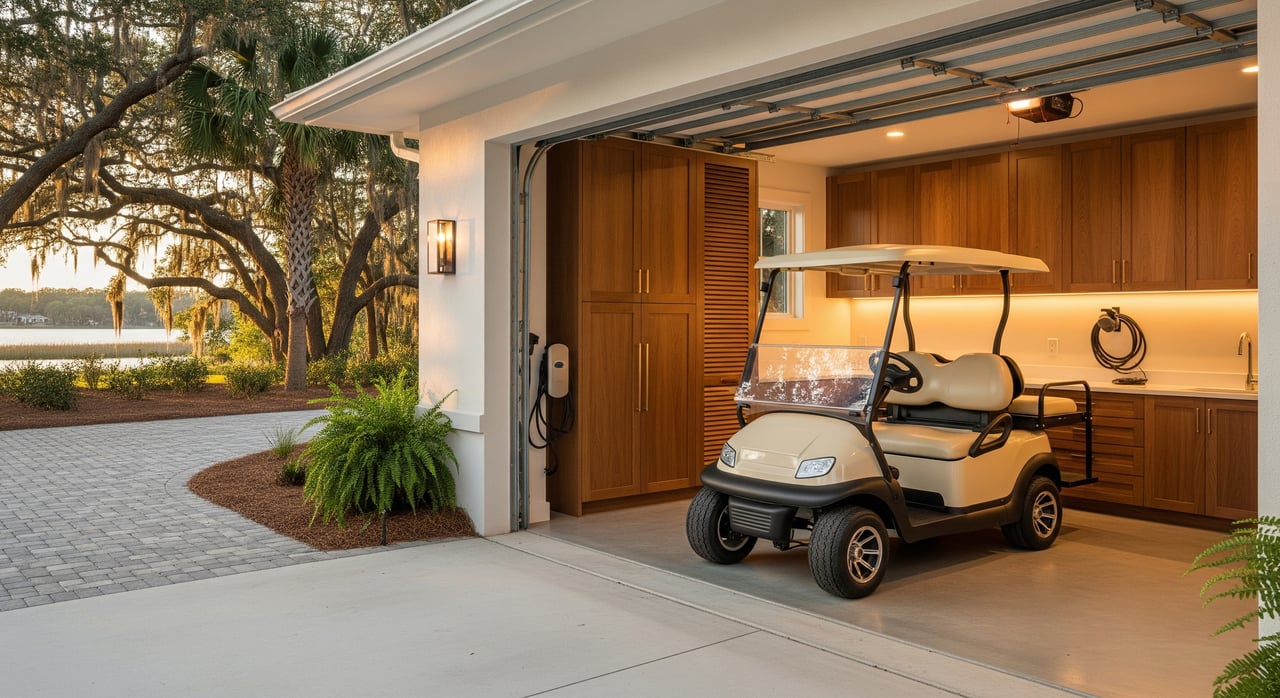
- Dedicated charging wall. Mount the charger, labeled outlets, a cord reel, a key hook, and a small shelf for battery care items. This reads as a plug and play amenity during showings.
- Battery care station. For flooded lead acid batteries, keep watering and testing tools handy, clearly labeled, and stored safely.
Lighting, access, and peace of mind
Bright LED fixtures help you see the charger status and navigate safely. Motion activated lights add convenience during quick trips. A keypad or smart entry on the garage door and any dedicated cart door underscores everyday ease.
Permits, HOA, and local checks
Before you add doors, outlets, or a detached cart shed, check local rules. In Lake County, new circuits and structural changes typically require permits and inspections. If you live in a community with an Architectural Review Committee, you may need approval for exterior changes, accessory structures, and visible electrical work.
Common triggers include adding new circuits, relocating panels, cutting a new opening for a mini cart door, and installing storm rated doors or attached structures. Confirm details with the Lake County Building Division and your community’s HOA or ARC.
Safety and documentation checklist
- Hire a licensed electrician for charger outlets and label the panel clearly.
- Keep copies of permits, inspections, and any HOA approvals with your home records.
- Label the charger with the cart’s battery type and voltage for the next owner.
- For lead acid systems, keep battery maintenance and recycling info on file.
- Test smoke or heat detectors near the garage and replace batteries on schedule.
Stage a cart ready garage buyers will notice
In cart friendly markets like Middleton, buyers appreciate spaces that feel ready to use. A clean, well organized cart bay signals convenience and low effort.
What resonates with buyers
Move in ready convenience stands out. Visible charging, tidy cord management, and a clean floor tell a clear story. Good lighting and labeled storage add a subtle sense of order and care.
Quick staging checklist
- Clear the bay and, if possible, stage a cart so buyers can see easy drive in and drive out access.
- Mount the charger, use a cord hook or reel, and show a simple label such as Cart charging station.
- Freshen the floor with epoxy, a polyaspartic coat, or a clean mat under the cart.
- Add slatwall with a few labeled hooks, one lockable cabinet, and a single overhead shelf.
- Turn on bright LED lights before showings and ventilate the space to remove any odors.
Listing description phrases
Use neutral, factual language that highlights function without promising specific lifestyles. Examples you can adapt:
- "Dedicated golf cart bay with mounted charger and cord management."
- "Epoxy coated floor at cart bay, slatwall storage, and lockable cabinet included."
- "Drive through cart access with keypad entry for convenient errands."
When you list, include a features sheet with permit copies, any HOA approvals, charger specs, and battery maintenance records. Documentation builds buyer confidence and supports your asking price.
Ready to plan or sell?
If you are preparing your Middleton home for market or you want a cart friendly space in your next home, you do not have to guess. With contractor level insight and local market experience, Martha Ridgway can help you right size the bay, prioritize safety upgrades, and stage the space so buyers see the value on day one. Request Your Free Home Valuation to start a personalized plan for your timeline and goals.
FAQs
Do I need a permit to add a golf cart charging outlet in Lake County?
- Electrical work that adds new circuits or relocates wiring typically requires a permit and inspection, so confirm with the Lake County Building Division and use a licensed electrician.
Can I plug any golf cart charger into a standard outlet?
- Many chargers for 36 or 48 volt systems use a 120 volt outlet, but always match the charger to the battery type and consider a dedicated circuit for reliability and safety.
Do I need ventilation when charging lead acid golf cart batteries?
- Yes. Flooded lead acid batteries release hydrogen during charging, so provide airflow and avoid tightly enclosed spaces. Keep flammables away from chargers.
How can I protect my garage floor from battery acid and water?
- Use chemical resistant coatings like epoxy or polyaspartic, place a waterproof mat under the charging area, and ensure the floor slopes to a drain or toward the driveway.
What staging features help buyers value a cart bay in Middleton?
- Show a visible charging station with tidy cord management, clean and durable flooring, organized storage, and easy drive in access, plus documentation for any permits or approvals.